How it works · field orchestration
We are not another system of record and we are not replacing your dispatch board. We take the slice of your data a job actually needs, wrap it in what that customer requires, put it in front of whoever is doing the work — ear, thread, phone or web — and hand the proof straight back. Five moves.
01 · Sync
Customers, sites, assets, work orders, techs, price book. Out of whatever you already run — a national FSM, your ERP, or the in-house system somebody built in 2009 and everyone depends on. If it lives in SQL Server or Postgres, that is the best case, not the hard one: an agent on your network reads exactly the slice we need and writes results back. Your GPS provider — Azuga, Verizon — comes along too.
Nothing is migrated. Nothing is replaced. The river flows through us, and your system stays the source of truth.
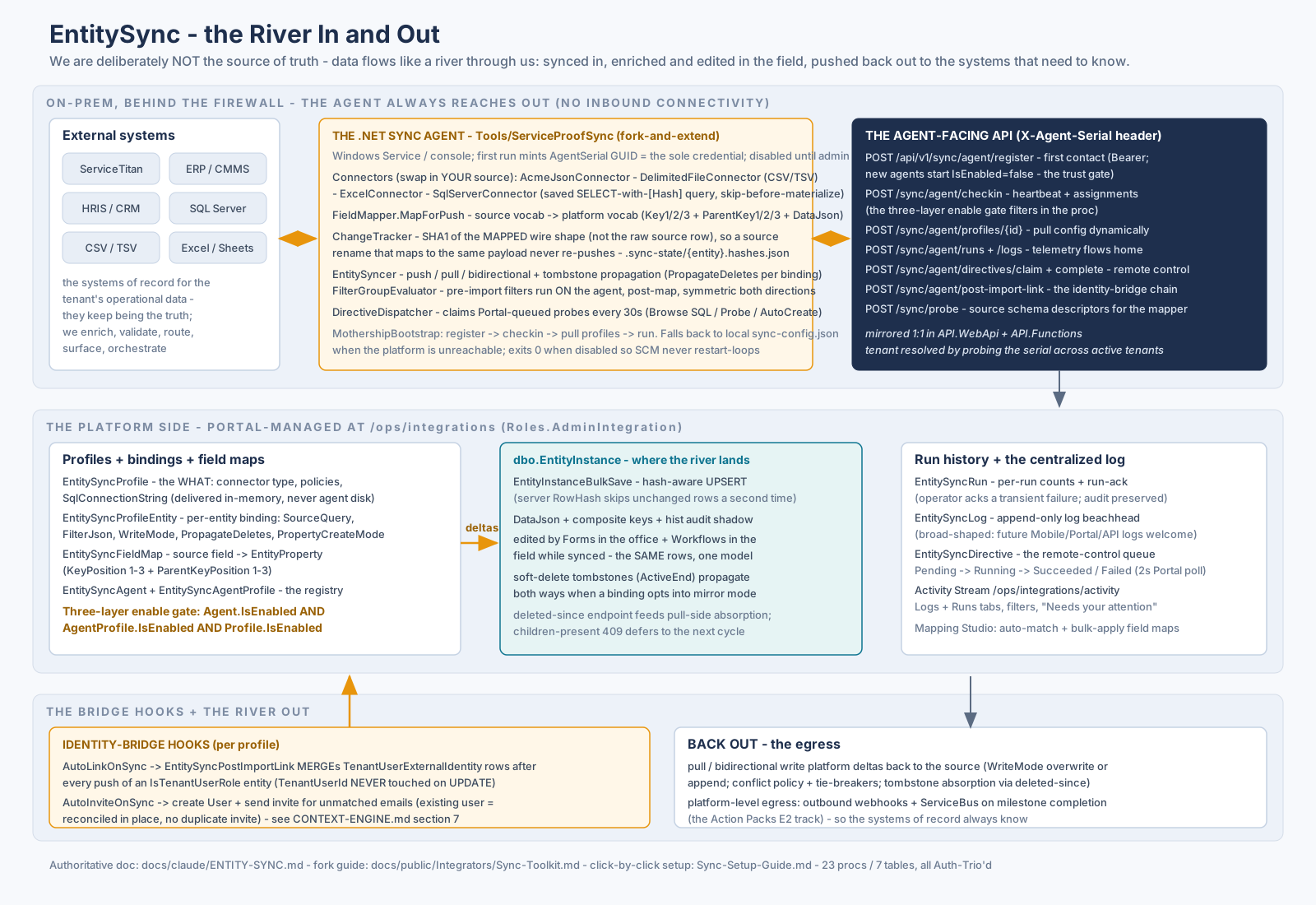
Only the slice a job needs, from the system you already run
02 · Context
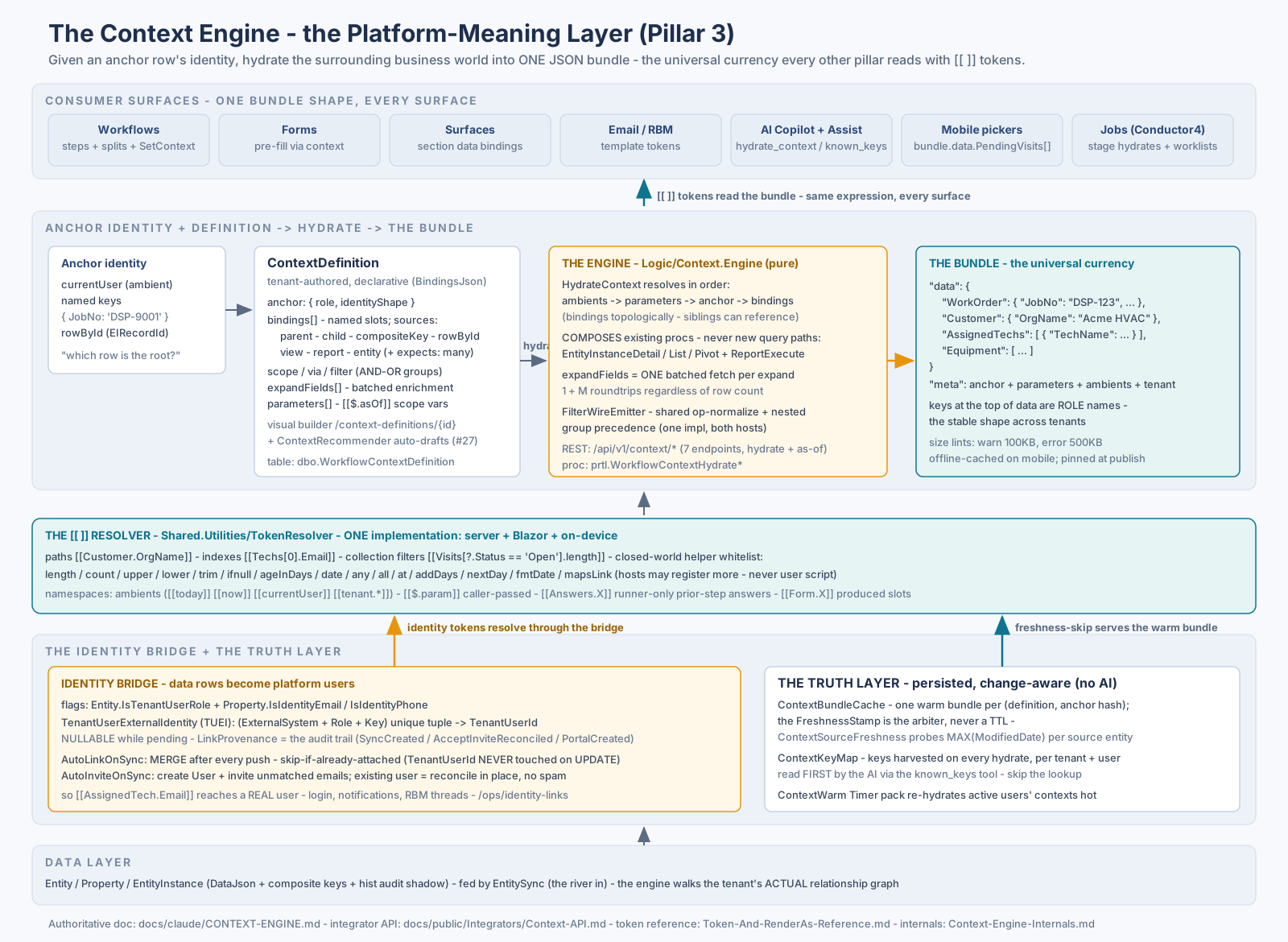
This is the part nobody else does. Around every job we assemble the world it lives in — this customer, this site, this asset, this program, its history, its open quote, its NTE ceiling — as one bundle the workflow can read.
So a job at a Public Storage site under one national and a job at a Dollar General under another are the same job type with different requirements, and neither the dispatcher nor the tech has to know that. The context does.
The world around the job, assembled
03 · Adapt
The workflow assembles itself from the context. Four photos and a gate code here, a different sign-off there, an extra reading for the customer who asked for one last spring. Adaptive per customer, per site, per season — because the conversation is designed, not compiled. No branch of forms to maintain. No tech choosing the right checklist off a list and getting it wrong.
You do not maintain forty variants of an inspection. You state the rule once over your own data, and each job assembles the steps it is owed.
Non-deterministic by design. Outside first, inside first, unit 3 before unit 1 — the gate is the data, not the sequence, so the record comes out identical.
If the program would bounce the invoice for a missing reading, the job will not finish without it — on site, while the truck is still there.
04 · Deliver
Your own crews get the app. Your subs get a text and install nothing. A tech on a ladder gets it read into an earpiece. The office gets a browser. Same authored job, same structured record out of all four — so you never have to choose between what the field will tolerate and what the office needs.
No more app nonsense for the people who will never install your app.
05 · Return
Readings, photos, GPS, timestamps, signature, parts used — structured, validated, and written back to the system it came from. A webhook fires the moment a milestone lands. A proof-of-service PDF assembles itself for the customer who wants paper.
And because it is all real data rather than transcripts, Power BI, Tableau or Excel connect to it directly — live, no export step, no nightly job.
Your field data, live, as ordinary tables
Nobody else has this
Not a chat app bolted on beside your work. A room anchored to WO-5001 — the tech, the dispatcher, the account manager, the sub, pulled in automatically because the job's context already knows who they are. Everything said there belongs to that job forever.
And in the room with them: the Commander. Ask it what is still open across today's board, what a tech captured an hour ago, which jobs are at risk of blowing their NTE. It reads the same live data the workflows write, so it answers from the job — not from a summary of a summary. When it wants to change something, it proposes and waits for a human to confirm.
“Chat about this job” opens a room already carrying the customer, the site, the asset and the right people. No one gets added by hand.
Ask in plain words. It answers from live jobs and captured answers, posts back cards, and can even read a photo somebody dropped in the room.
Ask the tech a question from the office and it lands on their phone in the thread they already use — the answer comes back into the room.
You are not ripping anything out
Your dispatchers keep dispatching where they dispatch. Your office keeps invoicing where it invoices. We sit beside it: the work order syncs in, auto-dispatch puts the right job in front of the right tech under your own rules, the field does the work through us, and the results flow back onto the record you already keep.
Data in and out like a river. Your system stays the source of truth — we just make sure the work that happens is the work you asked for.
For the enterprise that already has a platform
If you are a national FM platform, a large contractor with your own software, or a vertical SaaS serving this industry, you do not have to send anyone to our website. Embed the whole thing behind your own brand. Every capability here is a plain REST endpoint, so field orchestration becomes a feature of your product instead of another vendor your customers have to log into.
Verified sender, your name and logo at the top of the conversation. Your contractors never see ours.
Drive it entirely from your own screens. Authoring, dispatch, capture and proof are all API — the field experience is the part you do not have to build.
Nothing to install and no seat to buy for the contractors you direct. That is what makes program-wide adoption actually possible.
The whole idea
Your data flows in, gets enriched by the field on mobile or messaging, and flows back where it belongs — with proof attached. Nothing to migrate, nothing to rip out, plus nothing for your subcontractors to install.
Go deeper
The earpiece, deferred photos, and non-deterministic workflows — the parts built around how techs actually work.
CBRE, Vixxo, ServiceChannel — and the end customers underneath them, each wanting something different.
Your FSM, your ERP, your SQL or Postgres, your GPS provider — and BI straight out the other side.
Start free
Tell us the customer, the trade and what they demand at close-out. We will show you that job on a phone.